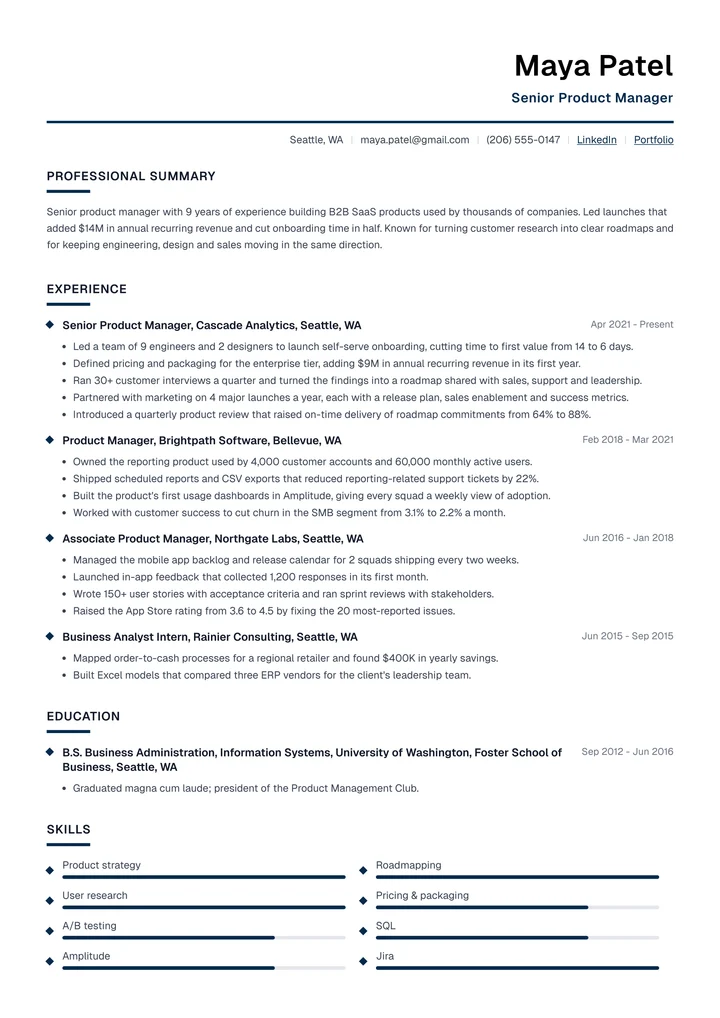
Certified nursing assistant resume example
A complete resume for a CNA in long-term care and rehab, plus summaries, bullet points, skills and how to list your registry status.
What hiring managers look for
Directors of nursing and staffing coordinators check one thing before anything else on a CNA resume: an active listing on the state nurse aide registry. Next they look at the setting (long-term care, rehab, hospital or home health), how many residents you care for on a shift, and whether you can handle transfers, feeding, vitals and charting safely. Strong candidates add attendance, low fall and skin-injury rates, and kind words from families.
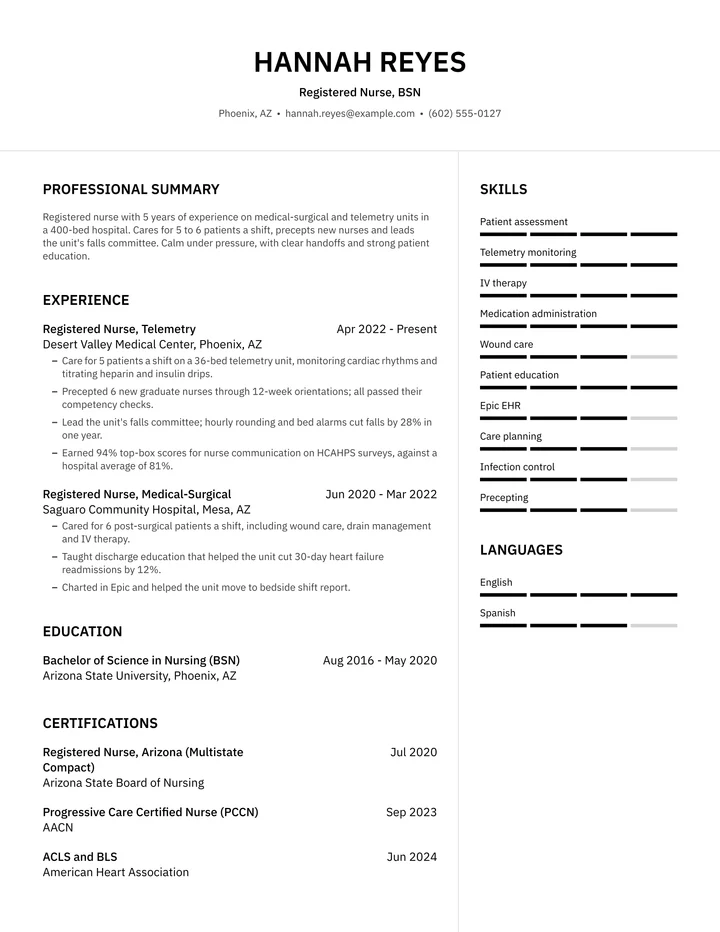
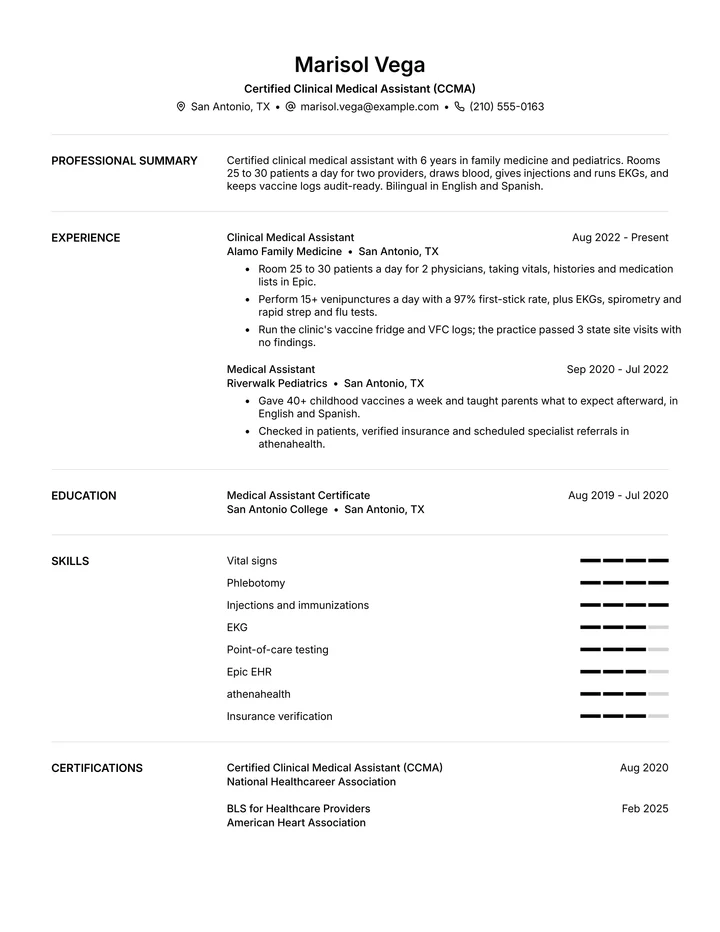
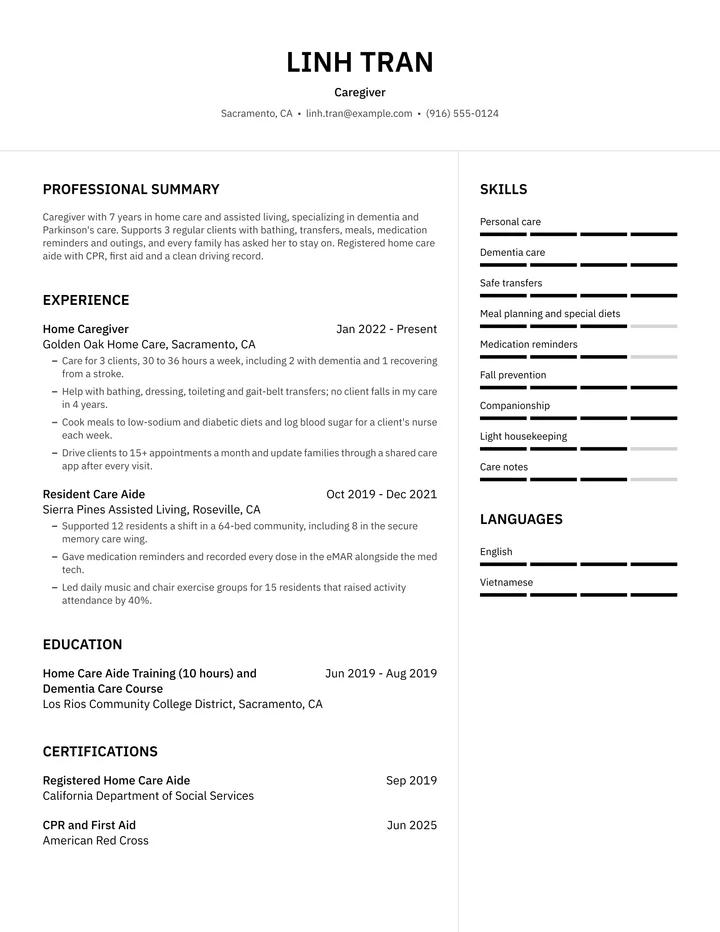
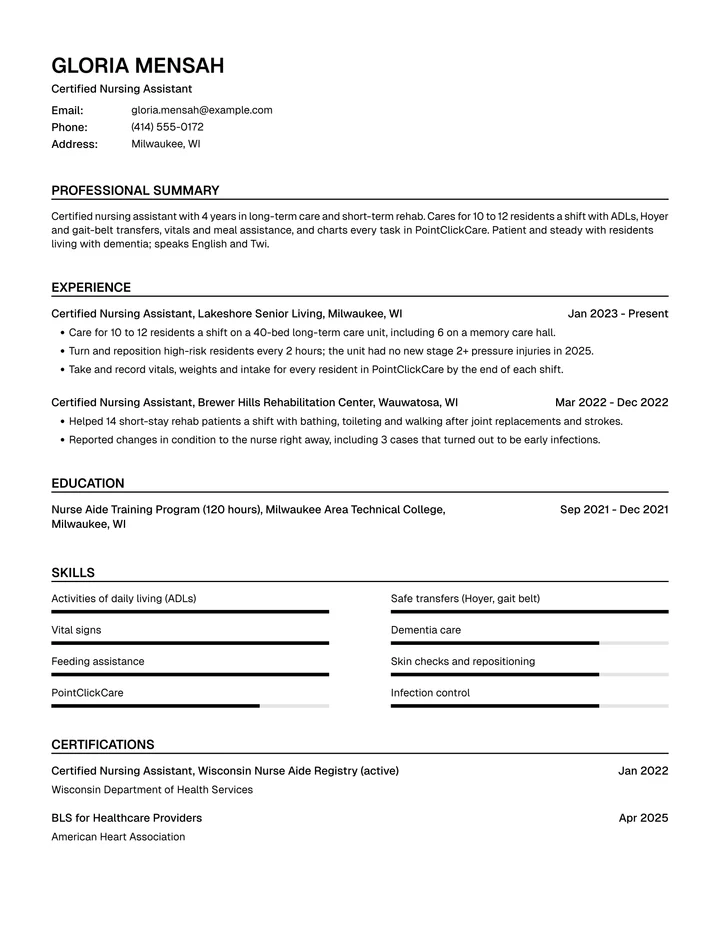
This example belongs to a CNA with four years in a nursing home and a short-term rehab center. Each job states the unit and the resident load, the registry listing sits at the top of the certifications, and charting is named by system. Hospital patient care techs, home health aides and restorative aides can follow the same plan with their own setting and numbers.
Certified nursing assistant resume summary examples
Experienced, 4 years
Certified nursing assistant with 4 years in long-term care and short-term rehab. Cares for 10 to 12 residents a shift with ADLs, Hoyer and gait-belt transfers, vitals and meal assistance, and charts every task in PointClickCare. Patient and steady with residents living with dementia; speaks English and Twi.
Newly certified
Newly certified nursing assistant who passed both parts of the state exam on the first try. Completed 40 clinical hours in a skilled nursing facility, caring for 6 residents a shift under a nurse's direction. BLS certified and open to evening and night shifts.
Hospital patient care tech
CNA and patient care technician with 5 years on a 32-bed orthopedic unit. Draws blood, runs EKGs and removes Foley catheters, and helps 8 to 10 post-op patients a shift get up and walking on day one.
On the way to nursing school
CNA with 3 years in memory care, now in the first year of an LPN program. Brings hands-on experience with dementia behaviors, end-of-life comfort care and family communication, plus a habit of careful charting.
Certified nursing assistant resume bullet points
Strong bullets start with what you did and end with what changed. Borrow the pattern, then use your own numbers.
- Helped cut resident falls on the unit by 25% in a year by answering call lights within 5 minutes and keeping walkers in reach.
- Fed 6 residents with swallowing problems each meal, following thickened-liquid orders with no choking events.
- Worked 98% of scheduled shifts over 3 years and picked up 60+ extra shifts during staffing shortages.
- Gave post-mortem care and sat with families during 20+ end-of-life cases on a hospice-certified unit.
- Completed restorative walking and range-of-motion programs for 9 residents, helping 4 move from wheelchairs to walkers.
- Charted ADLs, meals and bowel movements for 12 residents a shift in PointClickCare with no late entries flagged in audits.
- Calmed residents with sundowning by keeping routines, music and familiar faces, cutting as-needed medication requests.
- Collected urine and stool specimens for 30+ lab orders a month, labeled and sent on time.
Skills for a certified nursing assistant resume
Skills job postings ask for
- Activities of daily living
- Patient transfers and mobility
- Vital signs
- Feeding and nutrition support
- Skin care and pressure injury prevention
- Dementia and memory care
- Catheter and ostomy care
- Specimen collection
- Charting (PointClickCare, MatrixCare or Epic)
- Infection control and PPE
Skills to show in your bullets
- Compassion
- Patience
- Observation
- Physical stamina
- Communication with nurses and families
List the skills a posting names in its own words, and only the ones you can talk about in an interview. Qualities like these read best as results in your bullets, not as a list.
Tips for writing a certified nursing assistant resume
- 1
Show your registry status, not just the letters
"Wisconsin Nurse Aide Registry, active" tells a facility you can start on the floor right away. If you're moving states, say whether you've applied for reciprocity.
- 2
Name your setting and resident count
Long-term care, memory care, rehab and hospital units each run at different speeds. "10 to 12 residents a shift" or "14 rehab patients" shows the workload you can handle.
- 3
Use safety results as your numbers
CNAs prevent falls, pressure injuries and choking. Any drop in those, or a long run without one, is a stronger bullet than a list of daily tasks.
- 4
Mention attendance and extra shifts
Facilities struggle most with call-outs. A high attendance rate or the extra shifts you picked up make you stand out from other aides.
Your registry listing and certifications
Every state keeps a nurse aide registry, and employers look you up on it before an offer. Put the state, the word "active" and the year you were certified at the top of your certifications. Add BLS and any training that matches the job.
- Certified Nursing Assistant, with the state registry and "active"
- BLS for Healthcare Providers
- Dementia or Alzheimer's care training
- Medication aide (CMA or QMA), where your state allows it
- Phlebotomy or EKG training for hospital roles
Make it yours

Talk instead of writing
Writing about yourself is hard. Talking is easy. A 25-minute call with the resume expert gets you a resume built from your best work.

Fit it to every job
Paste a job posting and get every line tailored to it, in the words the employer uses.

Know it gets read
See what an applicant tracking system reads in your resume, and what to fix, before you apply.
A cover letter to match
Get a cover letter written from your resume for the job you want, ready to send with it.