Line cook resume example
A complete resume for a line cook in a high-volume scratch kitchen, plus summaries, bullet points, skills and the food safety cards to list.
What hiring managers look for
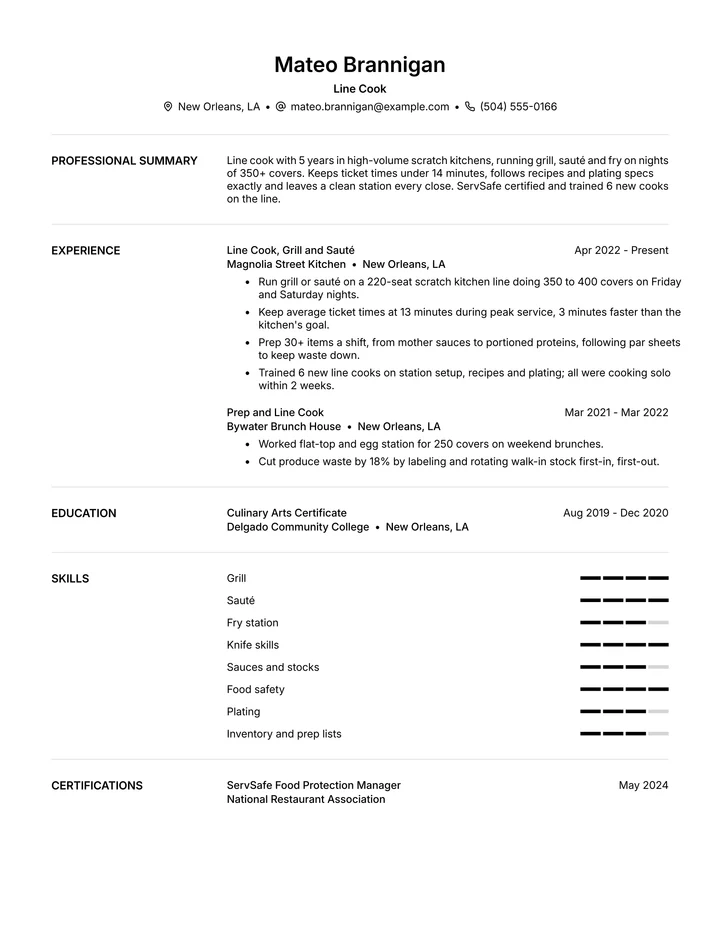
Chefs and kitchen managers read a line cook's resume for the stations you can run (grill, sauté, fry, garde manger, flat-top), the kind of kitchen you've worked in, from scratch bistro to high-volume chain, and how many covers you push on a busy night. They want speed, consistency, a clean station and a food handler or ServSafe card, and they notice whether you've opened, closed or trained others.
This example shows a line cook with five years in a 220-seat scratch kitchen and a busy brunch spot. Bullets give covers, ticket times and food cost results, so a chef can picture you on the line before the stage. Prep cooks, short-order cooks and cooks moving toward sous chef can use the same simple layout.
Line cook resume summary examples
Mid-level, 5 years
Line cook with 5 years in high-volume scratch kitchens, running grill, sauté and fry on nights of 350+ covers. Keeps ticket times under 14 minutes, follows recipes and plating specs exactly and leaves a clean station every close. ServSafe certified and trained 6 new cooks on the line.
Prep cook moving to the line
Prep cook with 2 years in a busy Italian kitchen, making pasta, sauces and portioned proteins for 300 covers a night. Fast, clean knife work and every par met before service. Ready to cook on the line, starting on fry or pantry.
Sous chef candidate
Lead line cook with 8 years in fine dining and hotel banquets, running the pass when the sous chef is off. Writes prep lists, orders produce, helps cost new dishes and keeps food cost within 1 point of target.
Fast casual and chain
Line cook with 4 years at a high-volume burger chain, cooking 600 tickets on a Saturday. Follows brand specs exactly, trains new hires on the grill and kitchen display system, and has never missed a health inspection item on my station.
Line cook resume bullet points
Strong bullets start with what you did and end with what changed. Borrow the pattern, then use your own numbers.
- Cooked 120 steaks to temperature on a single Saturday with zero returns to the kitchen.
- Created a weekly special from overstocked short rib that sold 85 plates and cut that week's protein waste.
- Ran the fry and garde manger stations alone on weeknights, covering for a cook short on the schedule.
- Scored 100 on 2 city health inspections as the closing cook responsible for temps and labels.
- Cut breakfast ticket times from 16 to 11 minutes by reorganizing the low-boy and pre-cracking eggs.
- Prepped and cooked for a 400-guest wedding banquet, plating 3 courses on time with a team of 5.
- Broke down 60 lbs of whole chicken and 2 pork shoulders a day, saving the kitchen about $500 a week over pre-cut.
- Kept every recipe card and allergen chart current for a 40-item menu after each seasonal change.
Skills for a line cook resume
Skills job postings ask for
- Grill, sauté and fry stations
- Flat-top and broiler
- Knife skills and butchery
- Sauces, stocks and soups
- Plating to spec
- Food safety and temperature control
- Prep lists and par levels
- FIFO and walk-in rotation
- Allergen handling
- Opening and closing the line
Skills to show in your bullets
- Speed under pressure
- Consistency
- Communication on the line
- Teamwork
- Reliability
List the skills a posting names in its own words, and only the ones you can talk about in an interview. Qualities like these read best as results in your bullets, not as a list.
Tips for writing a line cook resume
- 1
Name every station you can run
Chefs build schedules around stations. Grill, sauté, fry, pantry, pizza oven or flat-top: list each one you can cook alone during a rush.
- 2
Give covers and ticket times
Covers a night and average ticket times prove you can handle volume. "350 covers, 13-minute tickets" says more than "fast-paced kitchen."
- 3
Describe the kitchen's style
Scratch, fine dining, banquet, chain or brunch each ask for different skills. One or two words about the restaurant help a chef see if you'll fit their line.
- 4
Show you take care of the kitchen
Clean stations, good health inspections, low waste and careful labeling matter to chefs as much as cooking. A bullet on each shows you're someone they can leave to close.
Food safety cards and kitchen training
Many cities and states require a food handler card for every cook, and kitchens like at least one manager-level certificate on each shift. List what you hold with the year, and add any culinary training that taught you technique.
- Food handler card for your city, county or state
- ServSafe Food Protection Manager or a similar certificate
- Allergen awareness training, such as ServSafe Allergens
- Culinary school, certificate or apprenticeship
- Alcohol service card if you also work the bar or banquets
Make it yours

Talk instead of writing
Writing about yourself is hard. Talking is easy. A 25-minute call with the resume expert gets you a resume built from your best work.

Fit it to every job
Paste a job posting and get every line tailored to it, in the words the employer uses.

Know it gets read
See what an applicant tracking system reads in your resume, and what to fix, before you apply.
A cover letter to match
Get a cover letter written from your resume for the job you want, ready to send with it.