Nanny resume example
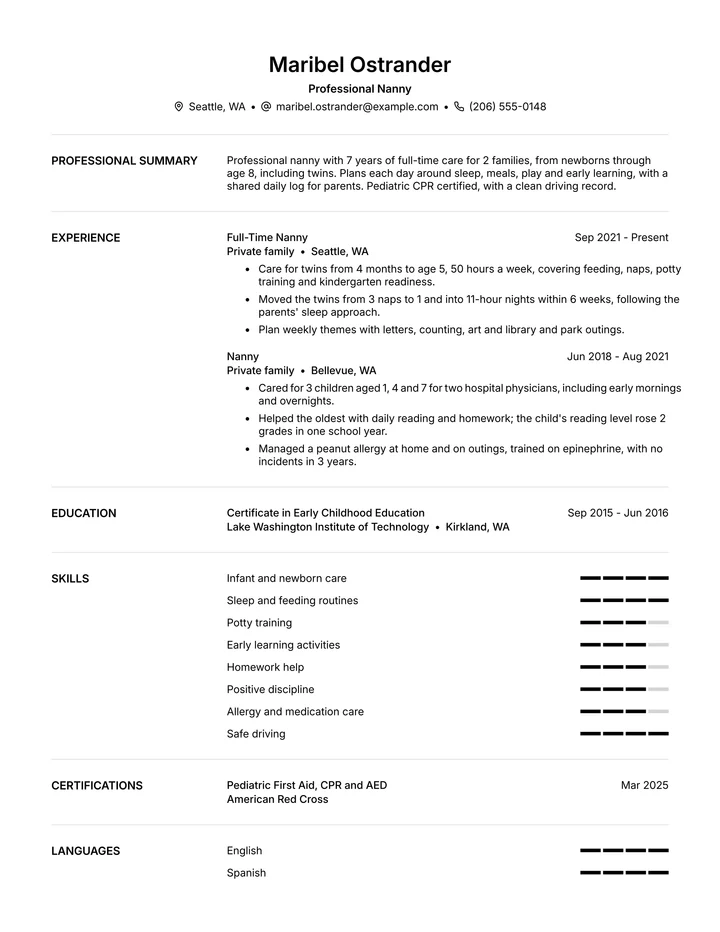
A complete resume for a full-time nanny caring for infants and school-age children, plus summaries, bullet points, skills and the checks to list.
What hiring managers look for
Parents and nanny agencies read a nanny resume for trust before skill. They look for how long each family kept you, the ages of the children, whether you've cared for newborns or twins, and whether your CPR and pediatric first aid are current. Next come the details of the day you can run: feeding and nap schedules, school pickups, homework help, light housework tied to the children, driving with a clean record, and references they can call.
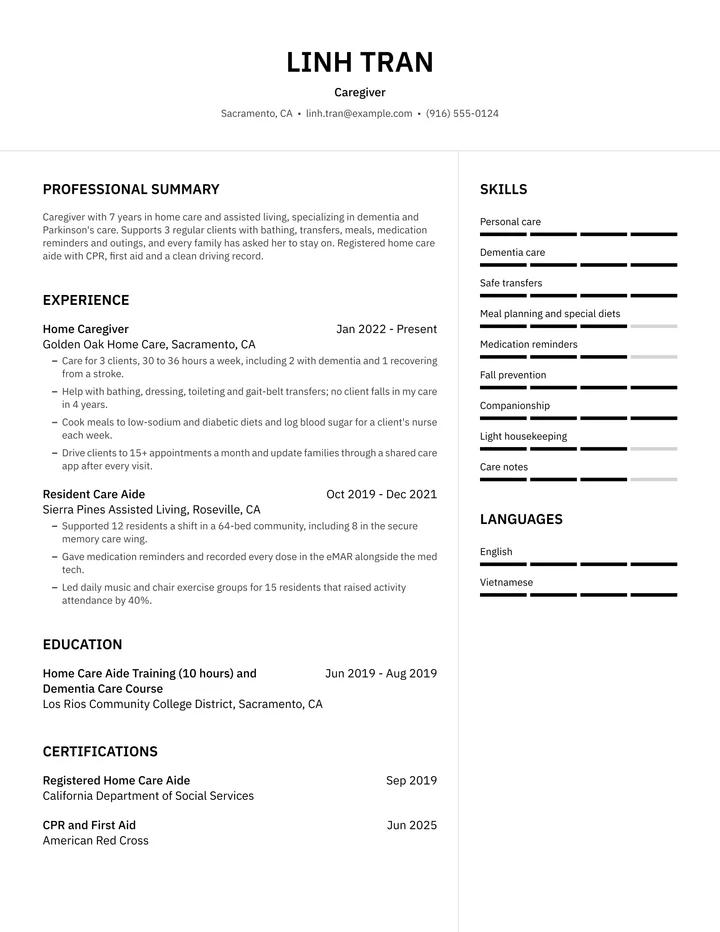
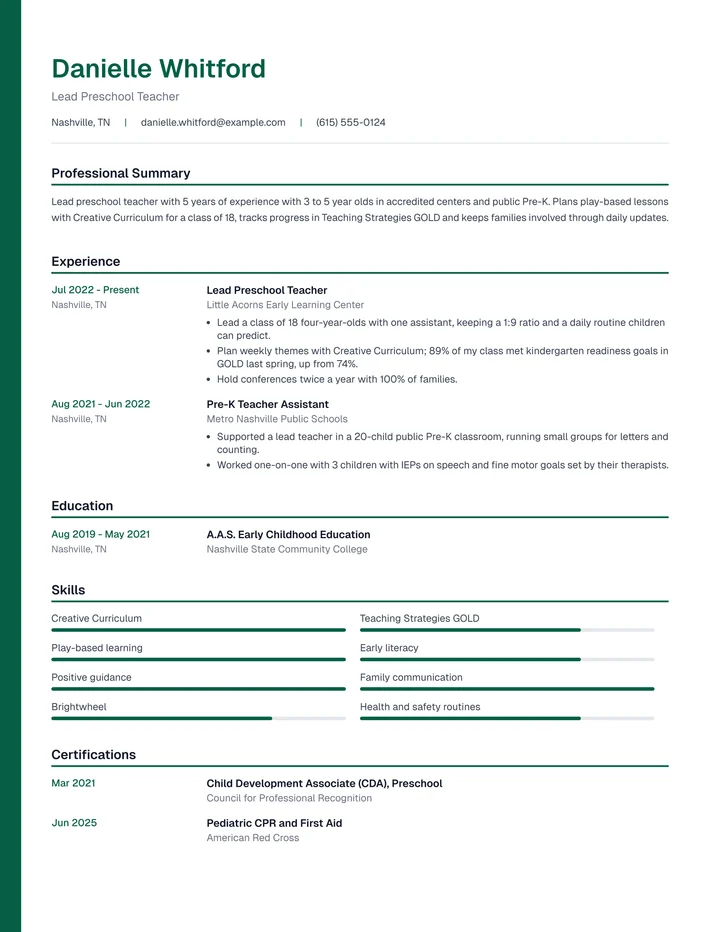
This example shows a nanny with seven years with two families, starting with infants and staying through preschool and early grade school. Each position lists the children's ages at the start, the hours and the routines handled, so a parent can picture the day. Babysitters moving to full-time work, newborn care specialists, au pairs and household managers can use the same layout.
Nanny resume summary examples
Experienced, 7 years
Professional nanny with 7 years of full-time care for 2 families, from newborns through age 8, including twins. Plans each day around sleep, meals, play and early learning, with a shared daily log for parents. Pediatric CPR certified, with a clean driving record.
First nanny job
Experienced babysitter for 6 neighborhood families moving into a full-time nanny role. Has cared for children from 10 months to 12 years, handled bedtimes and school pickups, and holds current infant and child CPR. Early childhood education student with flexible weekday hours.
Newborn care specialist
Newborn care specialist with 9 years supporting families through the first 12 weeks, including twins and premature babies. Sets up feeding and sleep schedules, supports breastfeeding and bottle feeding, and works overnight shifts so parents can rest. Certified in infant CPR and trained in safe sleep.
From teaching
Kindergarten teacher of 6 years moving into private nanny work for one family. Brings structured early literacy and math activities, calm behavior guidance and the habit of sharing daily updates with parents. Comfortable with children ages 2 to 8, swimming supervision and driving.
Nanny resume bullet points
Strong bullets start with what you did and end with what changed. Borrow the pattern, then use your own numbers.
- Stayed with one family for 5 years, from the first child's birth through the second child's start of kindergarten.
- Taught a 3-year-old to recognize all 26 letters and write their name before starting preschool.
- Kept a shared daily log of meals, naps, moods and milestones that both parents read each evening.
- Cared for 3 children under 6 during a 2-week solo stretch while the parents traveled, with nightly video calls home.
- Prepared organic, allergy-safe lunches and snacks for 2 children, building a weekly menu with the parents.
- Guided a 5-year-old through a speech therapy home program 4 days a week, practicing the therapist's exercises during play.
- Arranged 30+ playdates and outings a year, from nature walks to library story time, so the children saw friends weekly.
- Used calm, consistent routines to cut a toddler's bedtime from 90 minutes to 30 within a month.
Skills for a nanny resume
Skills job postings ask for
- Infant and toddler care
- Pediatric CPR and first aid
- Sleep and feeding schedules
- Potty training
- Early literacy and learning play
- Homework help
- Allergy and medication management
- Meal planning for children
- Safe driving and car seat installation
- Children's laundry and tidying
Skills to show in your bullets
- Patience
- Trustworthiness
- Clear communication with parents
- Flexibility
- Calm in emergencies
- Creativity
List the skills a posting names in its own words, and only the ones you can talk about in an interview. Qualities like these read best as results in your bullets, not as a list.
Tips for writing a nanny resume
- 1
Give ages and how long you stayed
"Twins, 4 months to age 5, 2021 to now" tells a parent your age range and your loyalty in one line. Long stays with one family are among the strongest things you can show.
- 2
Use "Private family" instead of a last name
Families value privacy, and a new family will notice if you protect it. Write "Private family" with the city, and give names and contact details only in your reference list.
- 3
Describe the day you ran
Naps, meals, school runs, activities and the parts of housework you covered show what a family can hand over to you. Mention whether you worked alone or alongside a parent at home.
- 4
Put safety training where it's seen
Pediatric CPR and first aid, water safety and newborn care training should be easy to spot, with dates. Parents and agencies often won't call a nanny whose certification has lapsed.
Background checks, driving and references
Families hiring a nanny almost always check your background, driving record and references, and showing you're ready speeds up the offer. Note what you can provide on your resume or in a short line at the bottom, and bring copies to the interview.
- A recent background check, or your willingness to complete one
- A clean driving record and your own reliable car, if you have one
- Current pediatric CPR and first aid, with the expiration date
- Two or three family references who can speak to the full length of your time with them
- TB test or vaccination records, if a family asks for them
- Your COVID-19 and flu vaccination status, if you're comfortable sharing it
Make it yours

Talk instead of writing
Writing about yourself is hard. Talking is easy. A 25-minute call with the resume expert gets you a resume built from your best work.

Fit it to every job
Paste a job posting and get every line tailored to it, in the words the employer uses.

Know it gets read
See what an applicant tracking system reads in your resume, and what to fix, before you apply.
A cover letter to match
Get a cover letter written from your resume for the job you want, ready to send with it.