Case manager resume example
A complete resume for a community case manager in housing and behavioral health, plus summaries, bullet points, skills and the credentials to list.
What hiring managers look for
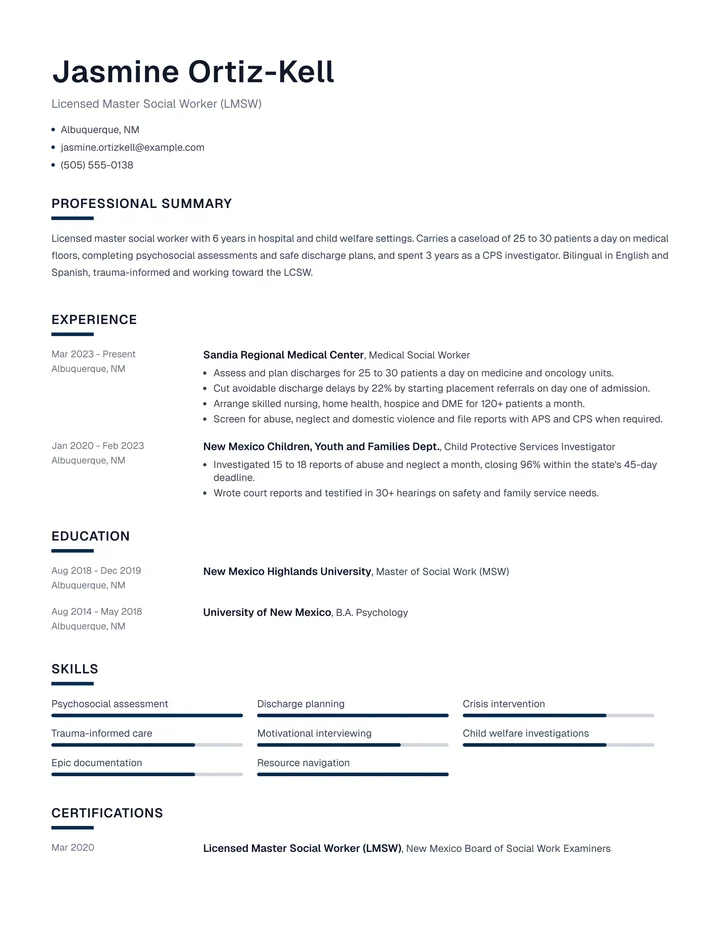
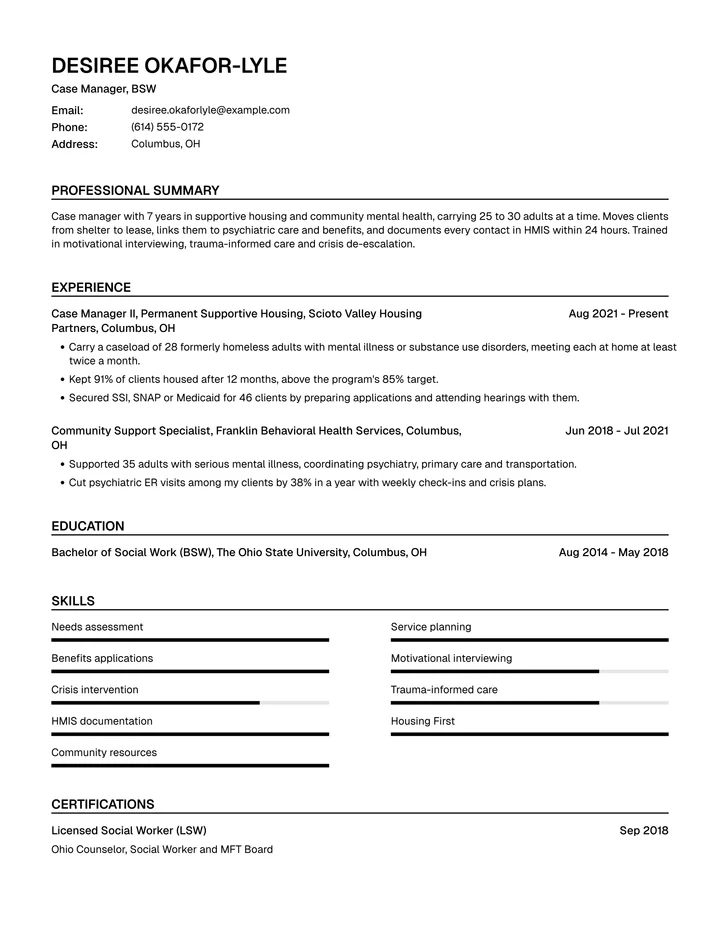
Program directors hiring a case manager want to know who you've served and how many at once: adults with serious mental illness, people leaving homelessness, older adults, youth in foster care or hospital patients near discharge. Then they look at outcomes they report to funders, such as housing placements, kept appointments, benefits approved and hospital readmissions, and at the systems you document in, like HMIS or an electronic health record.
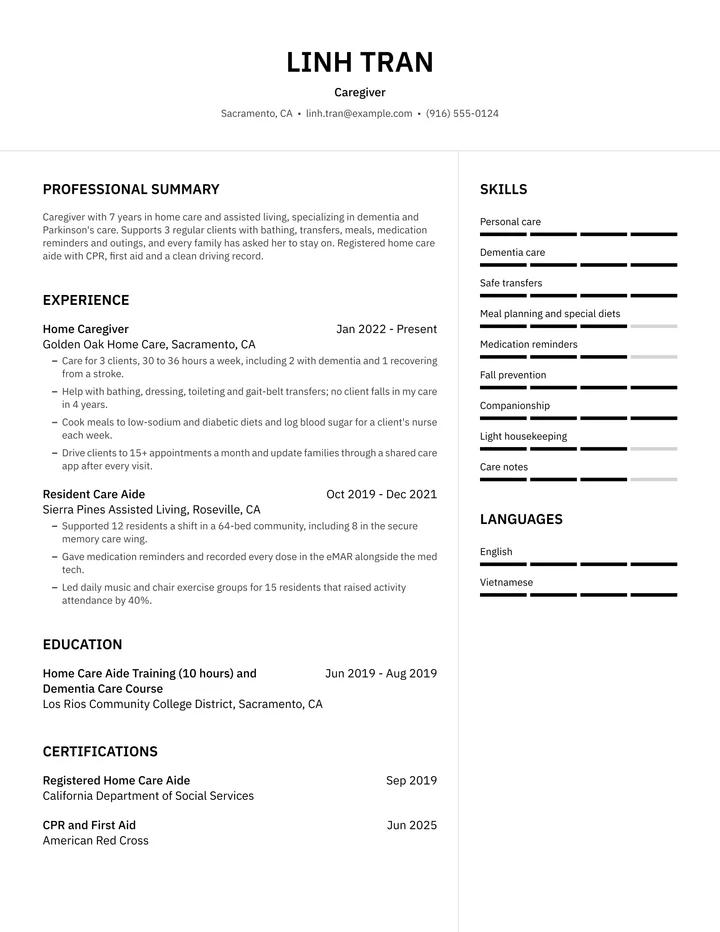
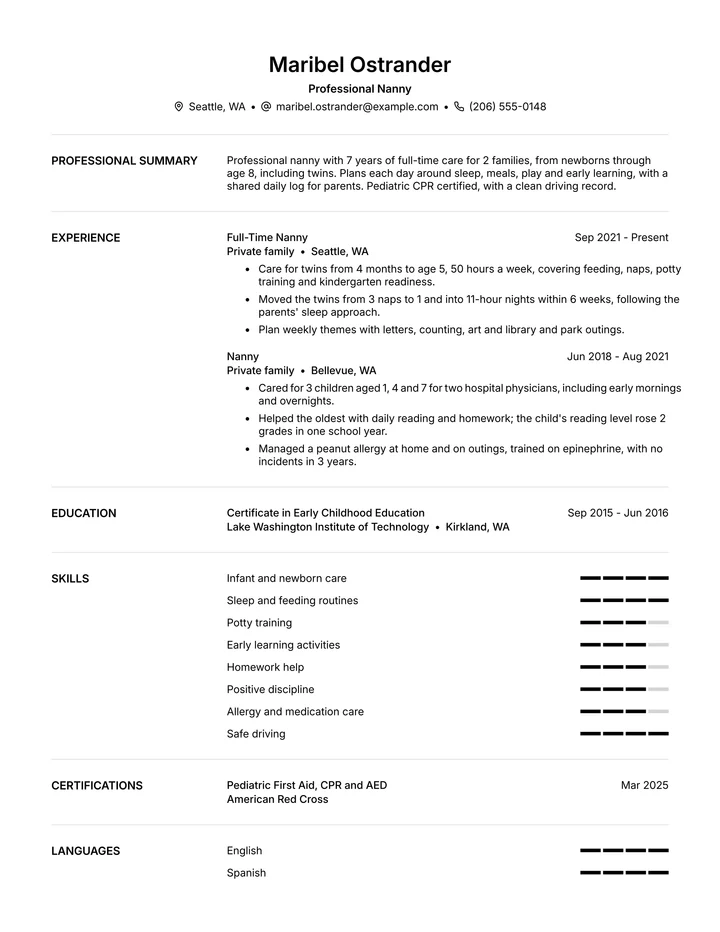
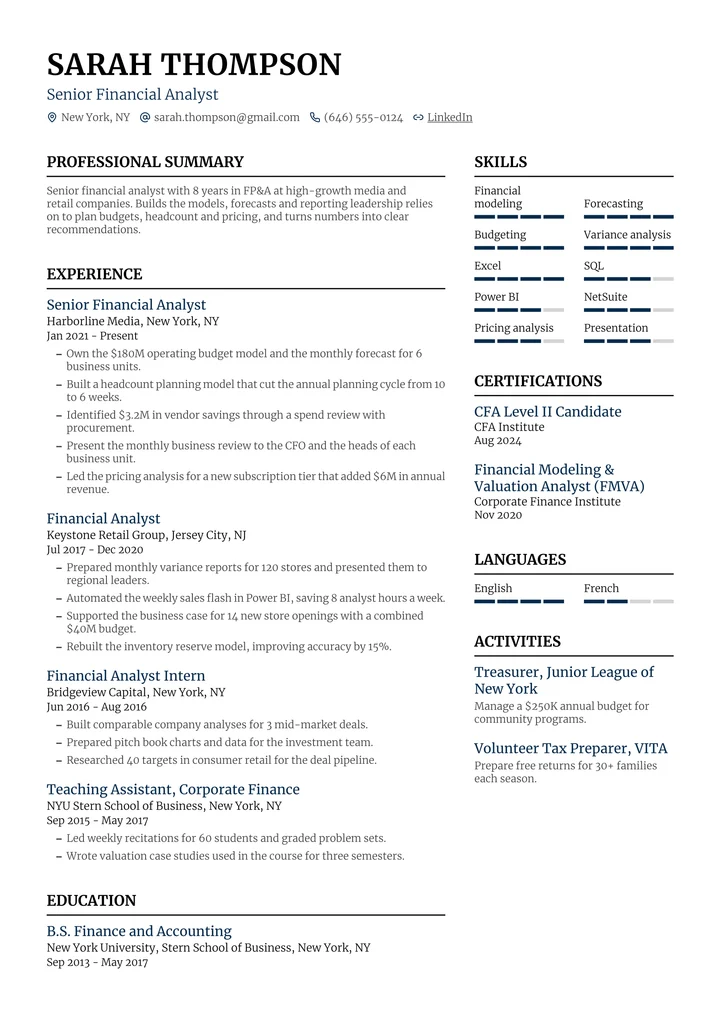
This example follows a case manager with seven years in supportive housing and community mental health, carrying a caseload of 25 to 30 clients. Each bullet pairs the service with a result: leases signed, Medicaid approvals, fewer ER visits. Hospital, insurance, veteran and child welfare case managers can use the same structure with their own populations and measures.
Case manager resume summary examples
Mid-level, 7 years
Case manager with 7 years in supportive housing and community mental health, carrying 25 to 30 adults at a time. Moves clients from shelter to lease, links them to psychiatric care and benefits, and documents every contact in HMIS within 24 hours. Trained in motivational interviewing, trauma-informed care and crisis de-escalation.
Entry level
Psychology graduate with a 500-hour practicum at a family shelter, where I completed intake assessments and helped 18 families apply for rapid rehousing. Bilingual in English and Spanish, organized in documentation and steady with people in crisis.
Hospital case manager
RN case manager with 8 years in acute care, running utilization review and discharge planning for 22 patients a day on medical units. Cut avoidable days by 15% and arranged home health, skilled nursing and DME so patients left on time with a safe plan.
From teaching
Former middle school teacher with 6 years of experience supporting students and families through IEPs, attendance problems and home crises. Moving into youth case management, bringing strong record keeping, calm conversations with parents and a network of local agencies.
Case manager resume bullet points
Strong bullets start with what you did and end with what changed. Borrow the pattern, then use your own numbers.
- Housed 54 chronically homeless adults in 18 months, building landlord relationships that opened 20 new units to the program.
- Brought the team's documentation compliance from 76% to 98% by building a weekly progress-note checklist.
- Reduced 30-day hospital readmissions among high-risk Medicaid members by 21% through home visits within 72 hours of discharge.
- Coordinated monthly case conferences with probation, psychiatry and housing staff for 12 clients on court-ordered treatment.
- Won $14,000 in emergency rental assistance for 31 households facing eviction during one winter.
- Oriented 7 new case managers on HMIS, safety on home visits and the agency's intake process.
- Managed a caseload of 40 older adults on a Medicaid waiver, keeping all of them in their homes rather than nursing facilities.
- Linked 90% of clients leaving jail to a primary care appointment within two weeks of release.
Skills for a case manager resume
Skills job postings ask for
- Intake and needs assessment
- Person-centered service planning
- Care coordination
- Benefits enrollment (SSI, SNAP, Medicaid)
- Housing First and rapid rehousing
- Crisis intervention and safety planning
- Motivational interviewing
- Trauma-informed care
- HMIS or EHR documentation
- Resource and referral networks
- Discharge planning
Skills to show in your bullets
- Empathy with boundaries
- Organization
- Advocacy
- Calm under pressure
- Clear writing
List the skills a posting names in its own words, and only the ones you can talk about in an interview. Qualities like these read best as results in your bullets, not as a list.
Tips for writing a case manager resume
- 1
Give your caseload and population in the first line
"28 adults with serious mental illness in supportive housing" sets the scene for the whole resume. A director can tell at once whether your experience matches their program.
- 2
Report outcomes the way funders do
Housing retention, benefits approved, readmissions avoided and appointments kept are what programs report to HUD, the state or insurers. Use those same measures so your numbers mean something to the reader.
- 3
Show you document on time
Case notes drive billing and audits. Mention the system you use and your timeliness or compliance rate, especially if you improved it.
- 4
List the evidence-based practices you use
Motivational interviewing, Housing First, critical time intervention and trauma-informed care are often named in grant contracts. Put the ones you're trained in where they're easy to find.
Licenses and credentials for case managers
Many case management jobs ask for a degree in social work, psychology or nursing, and some require a state license or a national credential. List what you hold with the issuing body, and add the specialized trainings your agency or funder requires.
- State social work license (LSW, LMSW or LCSW) or an RN license for hospital and insurance roles
- Certified Case Manager (CCM) or Accredited Case Manager (ACM)
- Mental Health First Aid and CPI or other crisis training
- Qualified Mental Health Professional (QMHP) status, where your state uses it
- SOAR training for SSI and SSDI applications
- A valid driver's license and insurance, if the job includes home visits
Make it yours

Talk instead of writing
Writing about yourself is hard. Talking is easy. A 25-minute call with the resume expert gets you a resume built from your best work.

Fit it to every job
Paste a job posting and get every line tailored to it, in the words the employer uses.

Know it gets read
See what an applicant tracking system reads in your resume, and what to fix, before you apply.

A cover letter to match
Get a cover letter written from your resume for the job you want, ready to send with it.